

The Hidden Flaws of AI-Generated Websites (And the Architecture Needed to Fix Them)
The promise of AI website builders is exciting: describe your vision, click a button, and watch a fully functioning website appear in seconds.
But behind the animations and instant gratification lies a messy reality. If you have used modern AI coding agents or website generation platforms recently, you have likely noticed a frustrating trend. The code works, but the website underperforms. It feels generic, runs slowly, and fails to rank on search engines.
The truth is that AI, left to its own outdated models, builds websites that are fundamentally flawed. Here is a breakdown of why today’s AI-generated websites are failing—and the architectural shift required to fix them.
1. The Technical Flaws: Functionality Without Optimization
AI models are trained to optimize for one thing: a successful compilation. They want to give you code that doesn’t crash. Unfortunately, "working code" is a far cry from "production-grade software."
The Client-Side JavaScript Trap
Many AI web builders lazily output heavy, client-side JavaScript shells (such as raw, unconfigured React apps). While this looks great in your browser during preview, it creates a massive Security and SEO Gap. Search engine crawlers heavily struggle to execute and read JavaScript-heavy frameworks efficiently. Also, by forcing client-side rendering from scratch, AI builders accidentally render your site invisible to Google.
Unoptimized and Bulky Code
By curiousity, if you check the code of an application built by any of the recent AI agent coding IDE like I did quite recently, you will likely see a mess of functions, bloated packages, terrible code plaing, and unoptimized logic. The AI doesn’t care about asset compression, clean dependency trees, smooth architecture, or rendering performance. It just piles on code until the feature works, leaving you with a bulky website that lags on slower network connections.
2. The Design Flaws: The Sea of Sameness
Because AI models are trained on existing web data, they optimize for the statistical average. This leads to severe design homogenization.

Average and Identical Layouts
You can spot an AI-generated website almost instantly. They almost always resort to the exact same visual tropes: a centered hero headline, a generic purple-to-pink gradient background, standard rounded cards, and uninspired abstract shapes. When everyone uses the same models, everyone gets the same website.
Accessibility and Mobile Responsiveness
AI excels at absolute layouts but struggles with fluid, contextual design. On smaller mobile screens, AI layouts regularly break, overlapping text elements or clipping containers. More importantly, AI completely ignores web accessibility (a11y). It rarely assigns proper ARIA roles, overlooks semantic HTML hierarchy, and misses the subtle nuances of color contrast and screen-reader compatibility.
Font Weight and Iconography Inaccuracies
A skilled designer knows how to balance typography weights and visual anchors. AI builders frequently mix mismatched font weights or use completely inconsistent icon libraries within the same UI box, making the final product feel unpolished and amateurish.
3. The Content & SEO Homogenization Problem
SEO is the lifeblood of digital discoverability. But as the internet becomes flooded with AI copywriting, search engines are shifting the goalposts.
When everyone uses the same base LLMs to write their copy, everyone ends up with identical content structures and generic value propositions. Any content that actually sounds human, structured, and distinct immediately stands out to search engine algorithms.
- The Insights Gap: AI completely fails to showcase real-world Experience, Expertise, Authoritativeness, and Trustworthiness (E-E-A-T)—the core pillars Google uses to evaluate content relevance. It cannot provide grounded, unique industry insights.
- The Hallucination Risk: Left unguided, AI will confidently hallucinate critical business facts, fake testimonials, or inaccurate technical specifications, destroying your brand's credibility.
Ultimately, these technical, structural, and content shortcuts make the majority of AI websites amatuerish and unmaintainable due to short-sighted architecture and terrible underlying practices.
The Solution: Building a Harness Around the Model
It is undeniable that AI models are getting smarter, more autonomous, and increasingly agentic. They will continue to improve rapidly. However, a raw LLM is fundamentally incapable of understanding your specific contextual constraints, deep architectural requirements, and unique brand identity from scratch.
Most AI builders lazily outsource the entire software development lifecycle to a raw AI prompt. That approach is broken.
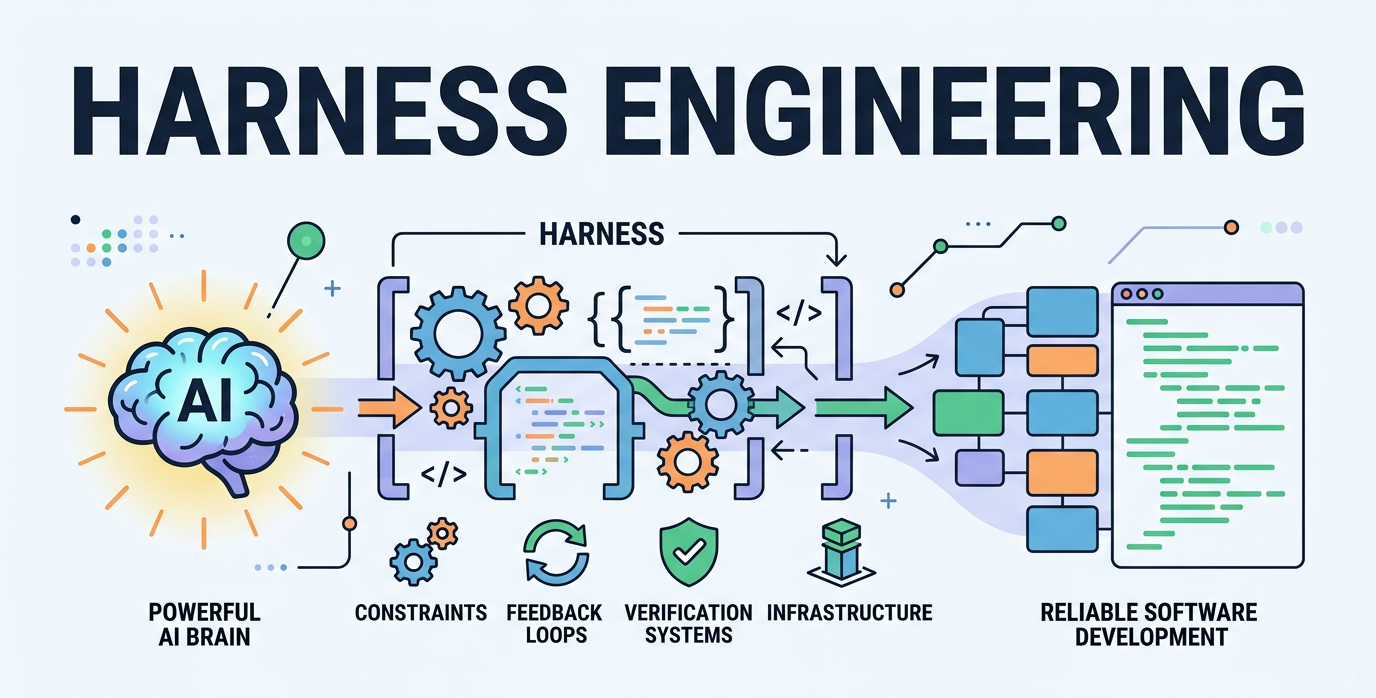
The solution is to build a harness around these AI models. A software harness doesn't just ask the AI to write code; it provides strict guardrails, deep contextual awareness, predetermined optimized architectural constraints, and rigid quality checks. Instead of letting the AI spit out random code from scratch, the harness forces the model to make decisions based on highly optimized, pre-engineered requirements.
This architectural harness is precisely why Anthropic’s AI models perform so exceptionally well when compared to raw alternatives in coding environments—they are built to respect structured context.
Experience the Proodex Difference
At Proodex, we aren’t just droping prompts directly into an API and calling it a website builder. We are actively developing a highly specialized AI system: a symbiotic combination of advanced foundational models and our proprietary engineering harness.
Our system forces the AI to output semantic, SEO-optimized, highly performant, and completely distinct web infrastructure. The result? An AI-generated website that doesn’t just "work," but actively outperforms your competitors.
Want to build a website that stands out, ranks high, and scales effortlessly?